Who does your agent work for?

Personal AI agents come with friendly names and eager mannerisms. Meta offers Muse and OpenAI offers Dots, each promising to book flights and negotiate lower subscription fees for its owner. As Meta’s Alexandr Wang rather dramatically claims in his post launching Muse, “Every unrealized want is a quiet tragedy of human potential.” Advocates for agents talk at length about how capable and obedient they are. The image of a master and their fiercely protective minion comes to mind. They say little about what happens when a user’s goals conflict with those of the platform running the agent. Buyers who expect a protector may eventually discover they have a broker.
Anyone handing an agent a password or a credit card should first ask whom it works for. The answer is not so straightforward. A single purchase often involves a seller and a platform as well as the buyer, and an agent can and will work both sides of the deal. Big tech companies have given people good reason to be wary. Search engines and social networks also started out free, and users ended up paying by being tracked and feeds that steered what they saw and bought. Without strong principles for protecting user interests, commercial forces push the market toward agents funded by sellers and advertisers rather than consumers.
Lindsay Owens has arrived at the same worry from the consumer side. Owens runs the Groundwork Collaborative, a think tank, and wrote “Gouged: The End of a Fair Price,” a book about price gouging that came out this year.¹ Shoppers, she argues, deserve to know whether their agent works for them or for the highest bidder.² This essay looks at who pays for agents and who controls the markets they shop in, and at how both are likely to change.
From eyeballs to errands
For 30 years the web has run on human attention. Publishers attract readers and sell their time to advertisers, who hope a glance turns into a purchase. Software has always shared the space, crawling pages and checking prices, but it worked out of sight. Now the balance has tipped. In June, Cloudflare, a network-infrastructure firm, reported that bot traffic on its network had overtaken human traffic for the first time. AI agents account for the recent surge, as people send them off to find information and, increasingly, to buy things. With Muse, Dots, Instinct and Grok Bot on the market, agents may soon do more on the web than people do.
Engineers are rebuilding the web’s plumbing so that agents can strike deals and pay for them without a human clicking “buy.” An agent that buys on its own rarely explains its choices. Its owner sees the hotel it booked, but not the ones it passed over or why. A platform or seller that wants to sway the agent can work its influence without being visible to most users.
Friends and guides
Commerce is full of middlemen with more than one client. Music streaming settled into an uneasy truce among artists, publishers, distributors and listeners. Financial advisers weigh their clients’ interests against the commissions they earn on the products they sell. Credit card networks balance the needs of issuing banks, merchants and cardholders, and any tilt toward one side can trigger complaints from the other two.
Agents will cover the same spectrum. Some will act as advocates, guarding their owner’s privacy and haggling on her behalf. Others will work as salesmen for advertisers and anyone else who wants to sway a buyer. Consider a first-time visitor to Cairo. She can lean on a friend who moved there recently, or she can hire a professional guide. The friend is on her side but does not know the city well. The guide knows every alley and every shopkeeper, and may take a cut from some of them. Plenty of people would pick the friend for a quiet weekend and the guide for a family trip. The best guides are often the ones who can play both roles - who pass for a friendly local while steering clients toward the shops that pay them the biggest commissions. This balancing act is delicate. Even when clients have a good experience, most recognize that outside interests still shape the final result.
Your mind-reading guide
Agents differ from guides in one important way: they know far more about their clients. Owens illustrates the risk with a parent at midnight with a feverish child. The parent asks an AI assistant what the symptoms mean, then tells it to order a thermometer and children’s medicine. Those two requests tell the assistant that this buyer is anxious and in no mood to shop around. A seller with that knowledge could charge the parent more than the next customer, a practice Owens calls surveillance pricing.³
Her organization has found evidence of how hard such pricing is to spot. In December 2025 an investigation by Groundwork, Consumer Reports and More Perfect Union found that pricing experiments on Instacart had charged some shoppers up to 23% more than others for the same item from the same store at the same time.⁴ Instacart said it assigned shoppers to test groups at random rather than by personal data, and the investigation found no evidence otherwise.⁵ In Cairo, the guide’s commission decides whose side he is on. An agent that has read its owner’s emails knows how much she will be willing to pay for those things that matter most.
The drift away from user loyalty
As our use of agents becomes more complicated, people may ask “Who are you working for?” more often and find it harder to get a straight answer. Someone might rely on a primary agent that hands tasks to others, each operating under a different backer or platform, and lose track of which one to trust with what. Over time, agents that begin on the user’s side tend to drift toward sponsors and platform owners, because platforms want to earn money from more of what their users do. An agent paid by its user has every reason to stay loyal. However, an agent funded by advertisers or sellers must ultimately serve them, even if it seems helpful most of the time. From the outside, a sponsored recommendation can look identical to genuine advice.
Agents that retailers own work for the retailer. On an earnings call Walmart said that shoppers who use Sparky, its AI assistant, spend about 35% more than those who don’t.³ Walmart presented the figure as good news. It did not say whether shoppers were better off for the extra spending.
Shoppers need a way to check whose interests an assistant serves. Those that earn lasting trust will be open about where their data comes from and who pays them.
The operating environment
The second factor is the operating environment: the rules and boundaries that dictate how buyers and sellers that meet in a marketplace are to trade. Storefronts and platforms set their own access rules depending on their strategy. A seller aiming for broad reach might leave its doors wide open, making prices and inventory easy for any agent to check and buy. Another, protecting an exclusive reputation or proprietary catalog, might keep agents out with subscriptions or anti-bot barriers. Mass retailers are likely to welcome agents, and luxury brands to turn many of them away. How useful an agent is depends on which stores let it in and allow it to buy.
Agents cost money to run, so somebody has to pay for them. Either the user pays a fee or a commercial partner covers the bill. Many users will happily take a sponsored agent, targeted recommendations and all, if it comes free or at a discount. The likely result is a thicket of pricing arrangements, and consumers who cannot easily tell whose incentives they are signing up for.
Four types of markets
Figure 1 plots loyalty against access. An agent near the top behaves like a fiduciary, and one near the bottom like a broker. Markets on the left let agents in only on negotiated terms, and markets on the right post their prices for anyone to see. Users pay for the agents in the top row. In the bottom row, businesses pay for them, in return for access to users and their data.
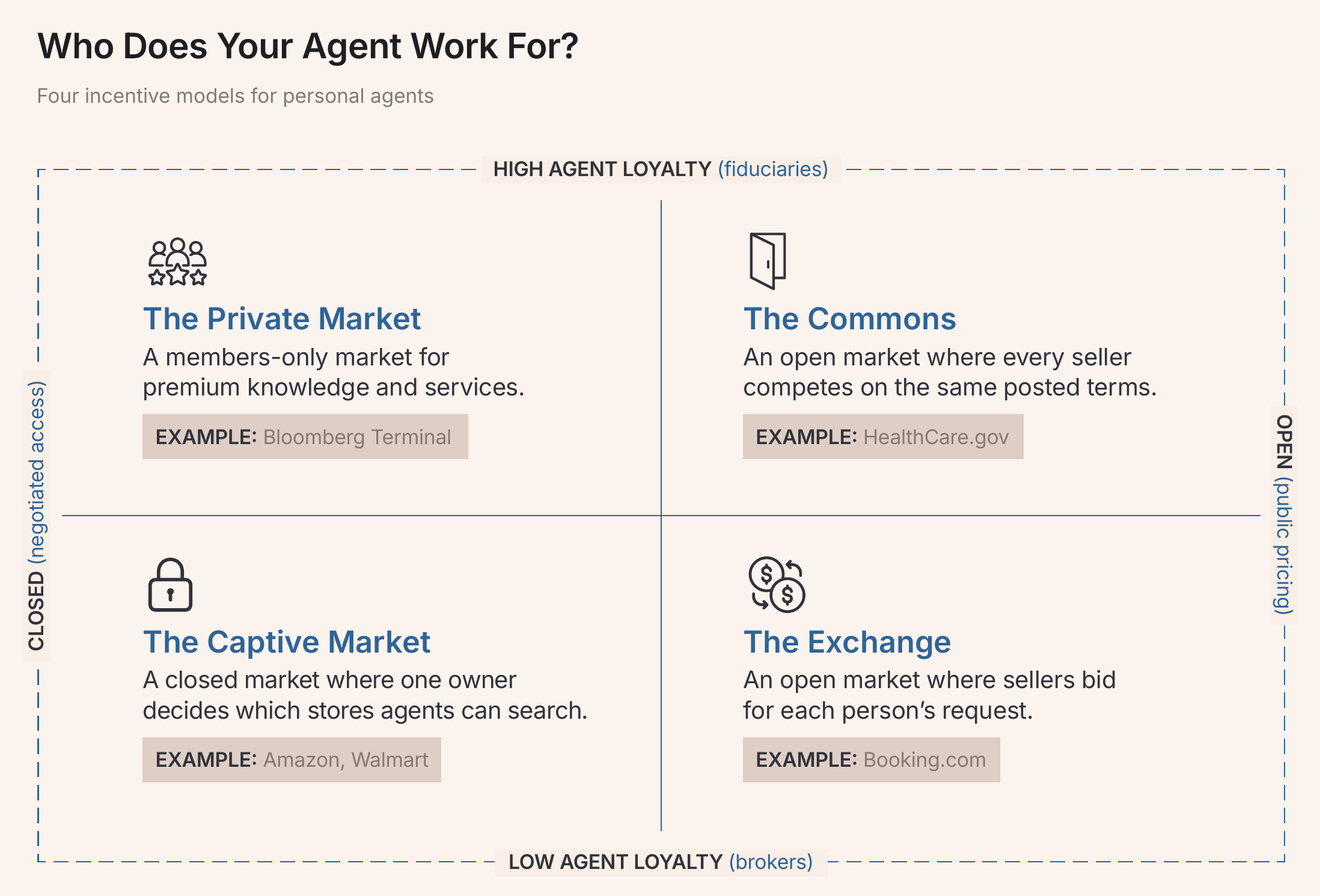
Figure 1. Four incentive models for personal agents
In a Private Market (top left), users pay for their agent and also cover access to its data sources—much like a Bloomberg Terminal or Westlaw subscription. Here, the agent searches for answers strictly across reachable paid sources. Sellers in this setup usually favor their own inventories, making it tricky for buyers to judge quality before paying.
In the Commons, at top right, the user or a public fund pays for the agent, and every seller competes on the same posted terms. Wikipedia works this way for information. For marketplaces, HealthCare.gov is a good example. Insurers list plans in standard tiers with posted prices, and shoppers compare them side by side.⁶ A Commons agent would buy what its user needs at the best price and then stop.
In a Captive Market (bottom left), a single platform owner funds the agent and controls which stores it can check. The agent primarily keeps users shopping within that ecosystem, prioritizing proprietary items and paid partners. Amazon’s Rufus and Walmart’s Sparky exemplify this approach.
Finally, in the Exchange (bottom right), advertisers and sellers sponsor the agent through ad fees and commissions while bidding for buyer requests. The agent fulfills user queries while maximizing transaction revenue, meaning commission rates and sales volume drive its suggestions. Ad-supported agent tiers and commission-based booking platforms operate under this dynamic.
The agents launched in recent months already fit into these quadrants. Meta says Muse carries no advertising, and Mark Zuckerberg expects the company to profit from small fees on transactions. But a transaction fee is a commission. It pays the agent for more purchases, not better ones, and that puts Muse in the Exchange even though it shows no ads. Dots leans the other way. OpenAI released it to paying Pro and Business Premium subscribers, and an agent that users pay for tends toward loyalty. ChatGPT straddles both rows. OpenAI shows ads to people on its Free and Go tiers and keeps its paid plans ad-free. It is also testing Sponsored Agents, which let users chat directly with an advertiser’s own agent. Two customers of the same company can end up with agents working toward different ends.
Talking about making money
Google is building a persistent Gemini assistant to compete with Muse and Dots, and has said little about how it will make money from it. On October 20th Alex Kantrowitz, host of the Big Technology Podcast, asked Sundar Pichai, Google’s CEO, how the company would earn money from agents. Pichai replied:
I’ve never seen examples where consumer products really scale to billions of users, where people are using it intensely, and haven’t had monetization to go along with it… At the end of the day, you will have commercial needs. The agents need to fulfill those commercial needs. The providers on the other side are going to see value in that. There’s going to be some mechanism by which it gets fleshed out. That’s what an efficient system does.
Pichai’s answer shows how hard the builders of agents work to avoid the basic question of how agents will get paid for the work they do. “The providers on the other side” are sellers, and Pichai plainly expects money to flow from them. Money can reach an agent from users, who pay subscriptions, or from advertisers and sellers, who pay for placement, commissions and transaction fees. Earlier in the same answer, he put it more plainly:
If you’re providing value to people, there is inherent value to be had.
The default drift
Left alone, the agentic web tends to slide toward weaker loyalty and then toward closed access. Platforms usually make these changes through updates to their terms of service, which few users read.
First, loyalty declines. Because running complex models is expensive and consumers resist paying subscription fees, platforms turn to advertisers and sellers to subsidize operations. For example, OpenAI began showing ads to users of its Free and low-cost Go tiers in February, while Meta has made Muse free for most use and expects, over time, to profit from a small fee on the transactions it completes. These financial models push agents out of the Commons and into the Exchange.
Next, access closes. Open exchanges reward the firms with the most data and the largest advertising businesses, and those firms have every reason to wall off their catalogs. Amazon already blocks dozens of outside agents from its listings while it promotes its own assistant.
Without counteracting forces, open commercial exchanges gradually consolidate into Captive Markets.
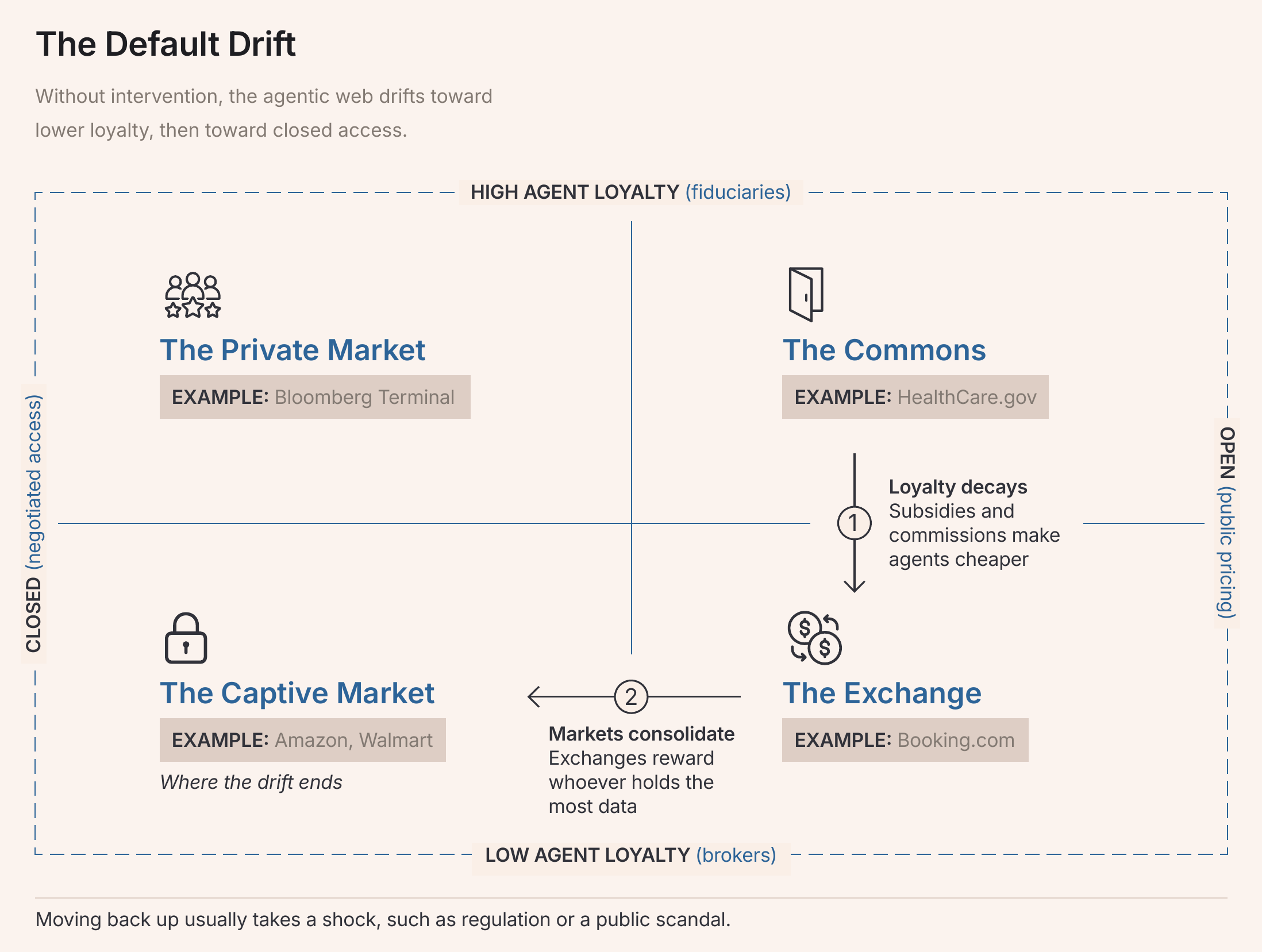
Figure 2. The default drift: loyalty decays, then access closes
Movement in the other direction rarely happens unprompted. It usually takes a shock from regulators or a public scandal, and even then the effect can fade. A 2024 antitrust settlement required American real estate agents in property deals to agree on their pay in writing before showing any homes. An industry survey in February nonetheless found commission rates back near where they stood before the settlement. Brokers were able to get their fees.
Five changes to expect
As more searching and shopping moves to agents, expect five changes in the rules and habits around them.
- Identities and allowances: Before a seller deals with an agent, it needs to know whom the agent represents and how much it may spend, so agents will need credentials and unique IDs that sellers can authenticate. Payment networks are already building agent cards with spending limits and approval steps. Over time agents will build track records that earn them more authority, much as a young person does with a first credit card.
- Personalities and values: Agents will take on their owners’ personalities. People will choose how their agents negotiate in the way they choose a lawyer, picking someone hard-charging for one job and someone patient for another. Agents will also carry their owners’ values, such as a preference for buying locally or a refusal to buy certain brands. This is one way agents will start to differentiate with one another, claiming to be more like their clients.
- Loyalty audits: Auditors will test agents’ loyalty. “Who are you working for?” needs an answer that a third party can check. Independent firms will check agents much as accountants audit companies, and monitoring services will flag agents whose recommendations start drifting toward sponsors. Human agents such as brokers and attorneys must act in their clients’ best interest and disclose conflicts of interest. A similar standard may emerge for AI agents, requiring them to disclose their interests and who funds them.
- Privacy and concealment: People will hide things from their agents. They will keep sensitive details from agents they distrust and use throwaway agents for delicate jobs. Some will delete an agent that has learned more than they are comfortable with.
- Premium loyalty: Loyalty will become a premium feature. By the end of 2027 every major consumer-agent platform will pay for its free tier with advertising or transaction fees, and each will sell a paid tier as the more loyal option.
Who we trust next
The tech giants are building agents to make decisions on their owners’ behalf, and that is the whole point of their appeal. Someone who hands an agent a credit card is outsourcing more than errands. She is handing over her judgment about which flight is worth the money and which shop deserves her patronage. For 30 years the web has sold human attention. The next 30 years will be about influencing agentic influencers. Buyers will have reason to wonder who profits from each recommendation. Many societies are already short of trust, and agents give people another party whose motives they must judge. People already spend real effort weighing the motives of those they know and of the public figures they read about. Can society bear the psychological cost of turning the same scrutiny on the machines that are being built to serve them?
References
Owens, Lindsay. Gouged: The End of a Fair Price—and What That Means for Your Wallet. Penguin Random House, 2026.
Sirota, David. “Lindsay Owens: Who Is Your AI Shopping Agent Working For?” The Lever, October 2026.
Owens, Lindsay. “Your Data, Their Profit: The Consumer Cost of AI Surveillance Pricing.” Written testimony, US Senate Judiciary Subcommittee on Crime and Counterterrorism, August 4, 2026.
Groundwork Collaborative. “New Report Exposes Instacart’s Hidden Price Games.” December 9, 2025.
Consumer Reports. “Instacart’s AI-Enabled Pricing Experiments May Be Inflating Your Grocery Bill.” December 2025.
Congressional Research Service. “Health Insurance Exchanges and Qualified Health Plans: Overview and Policy Updates.” R44065.